
Money, Power and the Making of a Middle East Crisis
اردو.. by Zahid Hussain
Allegations of corruption, secret payments and political deals have raised serious questions about Donald Trump’s Middle East policy. At the centre of these allegations is his son-in-law and former senior adviser, Jared Kushner, who reportedly worked closely with Israeli Prime Minister Benjamin Netanyahu and influential Gulf rulers to reshape the political landscape of the Middle East, with Iran as their common adversary.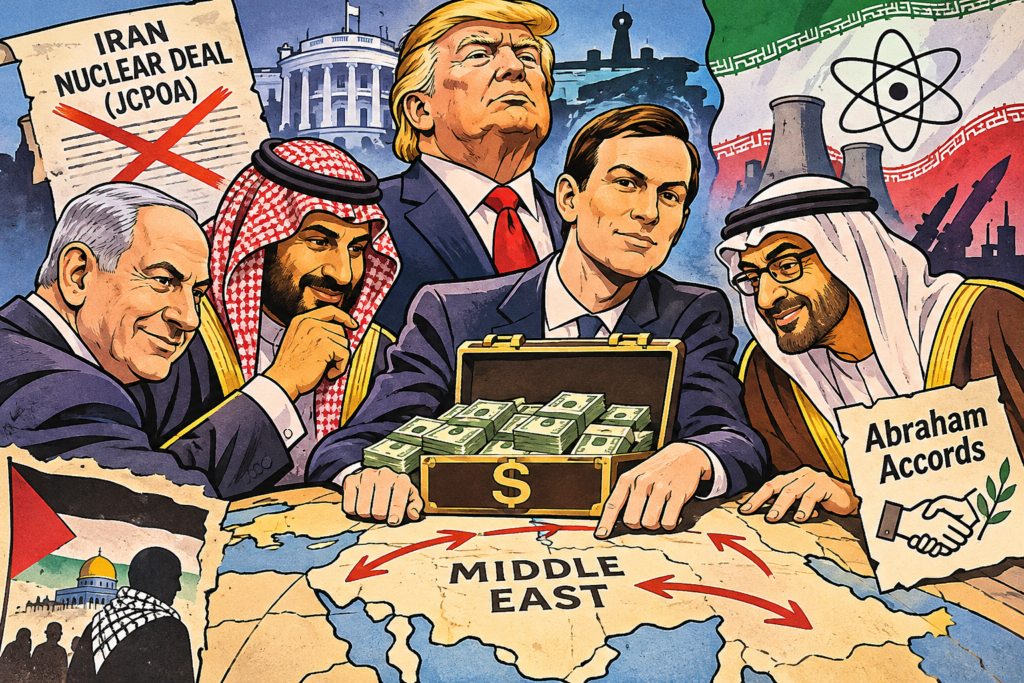
Investigative journalist Matthew Cole’s recently published book, Princes and Thieves, claims that billions of dollars were secretly channelled into accounts managed by Kushner by wealthy Gulf states. The alleged purpose was to influence American policy, destroy the Iran nuclear agreement and advance the political interests of Israel and certain Arab governments. Kushner has rejected the allegations as fabricated.
The 2015 nuclear agreement, known as the JCPOA, placed strict limits on Iran’s nuclear programme in return for relief from international sanctions. However, Israel, Saudi Arabia and the UAE opposed the deal, arguing that it failed to address their wider security concerns.
When Trump withdrew from the agreement in May 2018 and restored sanctions against Iran, relations between Washington and these Gulf states grew closer. According to the book, Saudi Crown Prince Mohammed bin Salman and UAE ruler Mohammed bin Zayed allegedly saw financial support for Kushner as a way to influence the new American administration.
Kushner also played a leading role in negotiating the Abraham Accords, which established diplomatic relations between Israel and several Arab countries, including the UAE and Bahrain. Critics argue that these agreements helped sideline the Palestinian question while advancing Israel’s regional interests.
The book further alleges that secret financial arrangements and defence understandings linked Israel, the UAE and Saudi Arabia, raising serious questions about transparency and conflicts of interest in American foreign policy.
These revelations, if proven, expose a disturbing relationship between money, political power and international diplomacy. Instead of bringing lasting peace, the pursuit of narrow national and personal interests appears to have contributed to greater mistrust, confrontation and instability across the Middle East. .. Source