
From Politics To ‘Polotics’: Chitralies Like To Disagree
اردوCHITRAL: As if politics was not enough, Chitralis seem to have graduated to “polotics”-the habit of turning almost everything into a political contest.
The recent controversy over the reconstitution of the Chitral polo body, and the reported involvement of the administration and defence forces, has certainly highlighted the importance polo has gained in the region. But it has also triggered strong criticism from those who 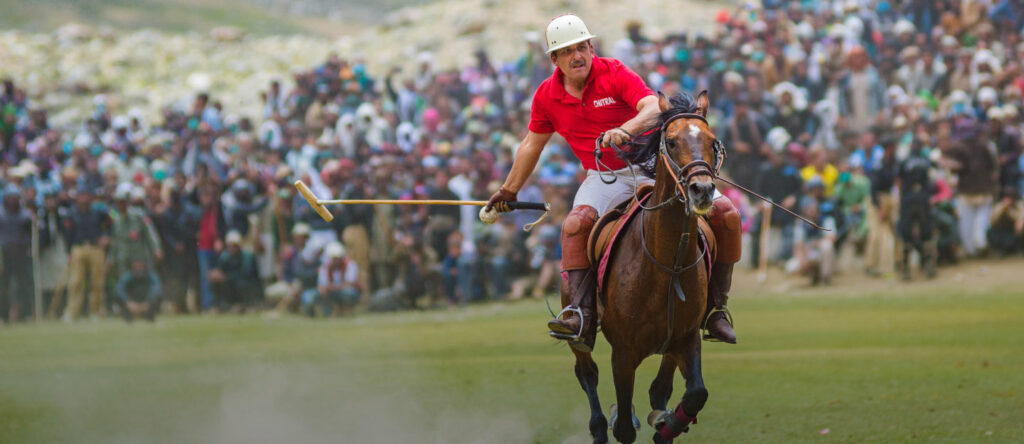 believe that polo should remain a completely indigenous affair, managed primarily by local people without unnecessary involvement of the government or defence forces.
What is particularly striking is what happened next. After the announcement of the new polo body, some veteran and senior players publicly opposed the new constitution. The opposition not only came from Chitral but from as far as Skardu GB. Now, another group of veteran and senior players has come forward to welcome it.
This is a familiar feature of human psychology: when one person or group supports something, another person or group often feels compelled to oppose it. In Chitral, this tendency has become almost predictable.
We have seen it before. If one person or group holds a press conference against a government official, alleging wrongdoing, it is not unusual for another group to hold a press conference the very next day in support of the same official. Instead of resolving the issue, the controversy simply produces another controversy.
Unfortunately, the same pattern now appears to be emerging around Chitral polo.
Polo is not merely a sport in Chitral. It is deeply woven into the cultural and social identity of the region. Over the years, several individuals have played an extraordinary role in taking Chitral polo to wider recognition.
Among the contemporary stars, Shahzada Sikandar Ul Mulk needs a mention on merit. He took polo seriously from his teenage years, made the sport his full-time pursuit and emerged as something of the “Ronaldo of freestyle polo” across the northern areas. His charismatic personality, combined with exceptional skill on the polo ground, has contributed enormously to the popularity and promotion of the sport throughout the region.
Veteran stalwarts such as Maqbool Ali Khan and Zafar Ali Shah have also rendered valuable services to Chitral polo and deserve due recognition for their precious contributions.
This is precisely why the current situation is so unfortunate.
When stalwarts of Chitral polo are pitched against one another, who ultimately loses? – Polo does.
The issue is bigger than one constitution, one body or one administrative arrangement. It is about protecting a sport that has become an important part of Chitral’s identity.
There is a lesson here beyond polo. When people of the same community are constantly pitched against one another, the institution or cause they represent becomes the casualty.
It is like pitching Shias against Sunnis—who ultimately loses? Islam does.
Similarly, when respected figures of Chitral polo are locked in confrontation, Chitral polo itself is the ultimate loser.
No one from outside is going to come and permanently mend these fences. The responsibility lies with the people within the polo fraternity.
The way forward is not more press conferences, more accusations or more camps. It is dialogue, reconciliation and a mutually agreed solution.
Chitral has given polo its passion, its players and its identity. The people who have served this great tradition should now come together to protect it.
Let polo unite Chitral rather than become another arena of division.