
Culture Pakistan: A Society That Punishes Questions
اردو.. by Quraysh Khattak
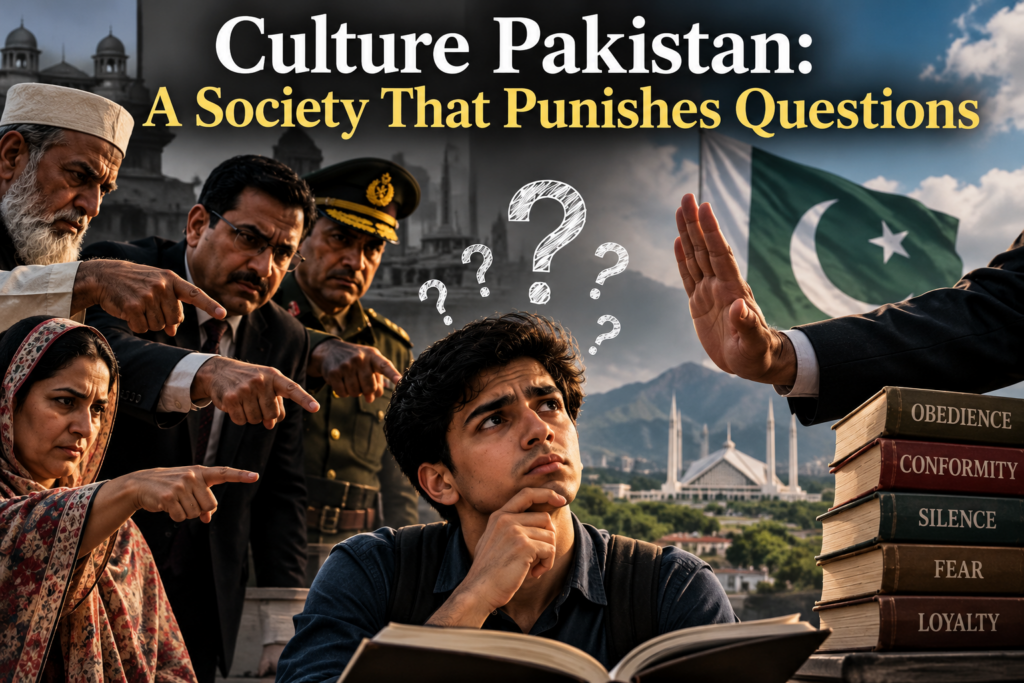
Pakistan’s biggest problem is not a lack of intelligence or education alone. It is a culture in which people are often discouraged from asking questions, challenging authority, and thinking independently. From homes and classrooms to offices and parliament, obedience is frequently valued more than reason, and loyalty often matters more than facts.
The parliamentary debate on the emergency and Governor’s rule in Khyber Pakhtunkhwa on October 15 showed how political and institutional loyalties can influence people’s judgement. Instead of examining evidence objectively, many people tend to accept an argument because it comes from someone they support and reject it because it comes from someone they oppose.
Critical thinking means examining facts, questioning assumptions, comparing arguments, and reaching conclusions through reason. Unfortunately, our education system often rewards memorisation rather than understanding. Students are expected to reproduce textbook answers instead of asking why something is true or exploring alternative solutions. As a result, many students earn degrees without developing the analytical skills needed to solve real-life problems.
The problem begins at home, where children may be discouraged from questioning elders, and continues in workplaces, where employees often hesitate to challenge their superiors. In public life, people frequently judge statements by the identity or political affiliation of the speaker rather than by the evidence presented. Social media makes matters worse by spreading misinformation and emotional claims.
Respect for elders, religion, traditions, and institutions is important, but respect should not mean accepting every claim without examination. Genuine faith and strong institutions need not fear honest questions. Changing one’s opinion when presented with convincing evidence is a sign of maturity, not weakness.
Pakistan needs an education system that teaches students to think, analyse, investigate, and solve problems rather than simply memorise information. Parents should encourage curiosity, teachers should welcome questions, employers should value constructive criticism, and public institutions should accept accountability.
A progressive society is not one in which everyone repeats the same answers, but one in which people have the courage to ask questions and the freedom to express their views. Pakistan does not merely need more educated people; it needs people who can think independently, judge facts fairly, and challenge mistakes without fear. Only then can education become a real force for national progress. .. Source