
Chitral: A Laboratory of Good Governance for Pakistan
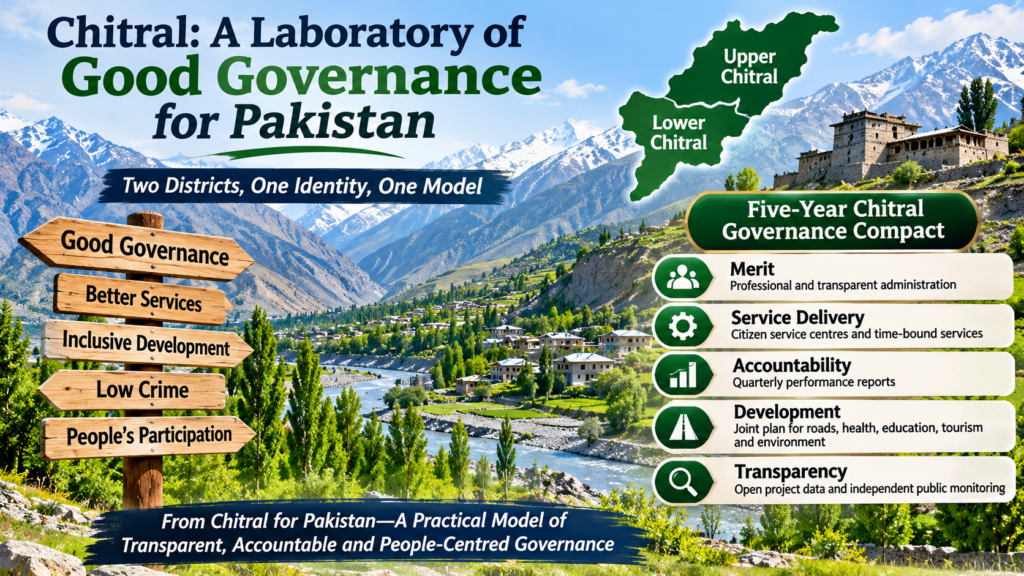
CHITRAL: What if Lower and Upper Chitral were transformed into a model of good governance, setting an example for the rest of Pakistan? The idea may sound ambitious, but Chitral possesses several inherent advantages that make this ambition worth pursuing.
Although administratively divided into two districts, Lower and Upper Chitral remain one historical, geographical and cultural entity. Their people share a common identity, social traditions, family connections and a long history of coexistence. Administrative boundaries may have changed, but their social bonds remain intact.
One of Chitral’s greatest assets is its social character. Its people are generally known for hospitality, tolerance, adaptability and community cooperation. The region has historically enjoyed relative peace and social harmony. These characteristics constitute valuable social capital for effective administration.
Geography offers both advantages and challenges. Its identifiable entry and exit routes can facilitate administrative coordination and security management. However, scattered settlements, difficult terrain and harsh winters make service delivery challenging. Modern technology and decentralised public services can help overcome these limitations.
But natural advantages alone cannot produce good governance. Chitral needs competent leadership, merit-based appointments, transparent administration, accountability and freedom from political interference.
A practical beginning would be a Five-Year Chitral Governance Compact, jointly developed by the two district administrations with provincial government support. It should have five clear objectives:
- Merit: Ensure transparent recruitment, professional administration and performance-based evaluation of government officials.
- Service delivery: Establish accessible citizen service centres, digital complaint systems and fixed timelines for routine public services.
- Accountability: Publish departmental performance reports every quarter and make officials answerable for results.
- Development: Coordinate roads, healthcare, education, tourism, hydropower and environmental protection through a common regional development plan.
- Transparency: Publicly disclose development budgets, project costs, contractors and completion progress. Involve civil society and professional bodies in independent monitoring.
An annual public governance scorecard should measure progress and identify failures.
This initiative requires political leadership, but it must rise above party politics. Elected representatives, district administrations, business communities, professional associations, civil society and educated youth must come together to own this agenda.
Chitral should not wait for Islamabad or Peshawar to show it the way. Its leadership and people must demand and demonstrate a better model of governance themselves.
Let Lower and Upper Chitral prove that two districts, united by history, geography and identity, can become one exemplary model of administration for Pakistan.
The potential exists. The roadmap is achievable. What is missing is collective will. The time to act is now. .. CN report, 17 Nov 2026