
The Gulfstream And The Broken Shoulders of Pakistan
اردو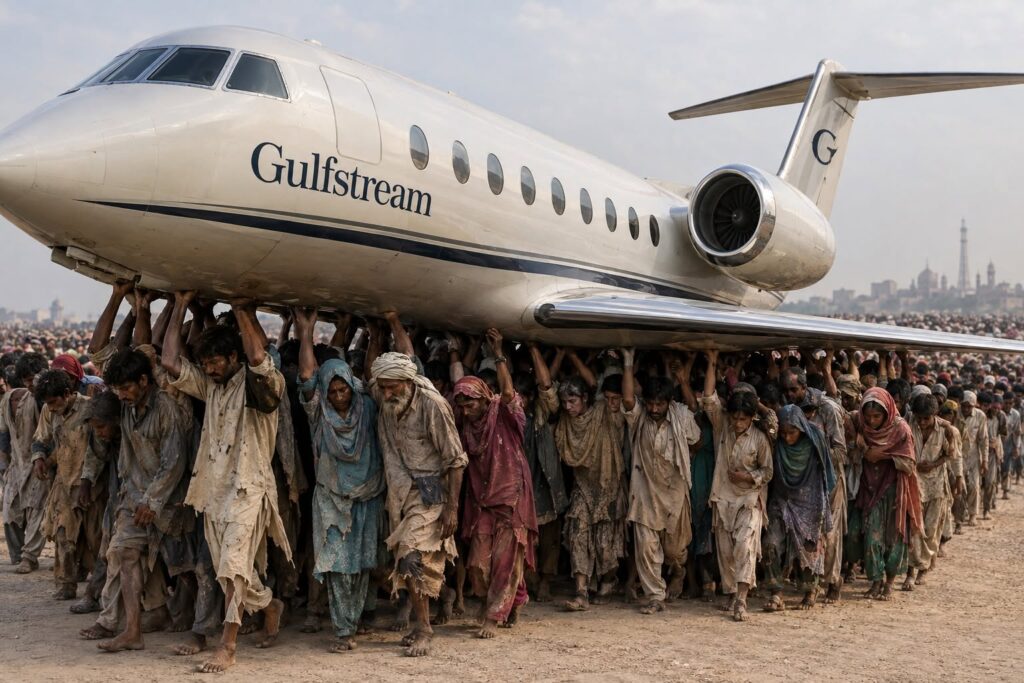 The striking image accompanying this post may not be a literal scene, but its message is difficult to miss: when rulers enjoy extraordinary luxury, ordinary people are often left carrying the burden.
The controversy over Punjab government’s acquisition of a Gulfstream G500 has brought this question into sharp focus. The aircraft has been valued by various reports at around $38–42 million, or more than Rs10 billion. The government says it is part of the planned “Air Punjab” initiative and is a government asset. Critics, however, have questioned whether such expensive VIP aviation is appropriate when public resources are under pressure.
But the issue is bigger than one aircraft.
Pakistan spends enormous amounts maintaining the privileges, vehicles, residences, travel arrangements and other facilities of its political and administrative elite. At the same time, ordinary citizens struggle with expensive electricity, petrol, food, healthcare and education.
The question is simple: should scarce public money first provide luxury for those who govern, or basic dignity for those who are governed?
Government vehicles could be reduced. Expensive official travel could be restricted. Luxury aircraft could be sold or used only where genuinely necessary. The savings could go towards repayment of loans, schools, hospitals, sanitation, clean water and safer public services.
There is another revealing example. Workers should not be sent into raw sewage simply because machines are not available. If technology can replace dangerous manual labour, governments should use it.
Pakistan does not lack hardworking people. It lacks the discipline to put public money where it matters most.
The country can become prosperous. But progress will remain difficult if the ordinary citizen continues to carry the cost of an oversized system of official privilege.
Respect the people. Reduce the burden. Let public money serve the public. .. CN report (idea and photo borrowed from FB post of Naeem Sadiq)