
Why Socrates Despised Democracy
اردوSocrates, the famous Greek philosopher who lived in Athens in the fifth century BC, questioned whether ordinary citizens were wise enough to make important political decisions. He was concerned that democracy, based on majority rule, could allow uneducated people to influence the future of the state.
Socrates believed that people could easily be misled by powerful speakers who used emotional speeches, fear, anger and attractive slogans to win public 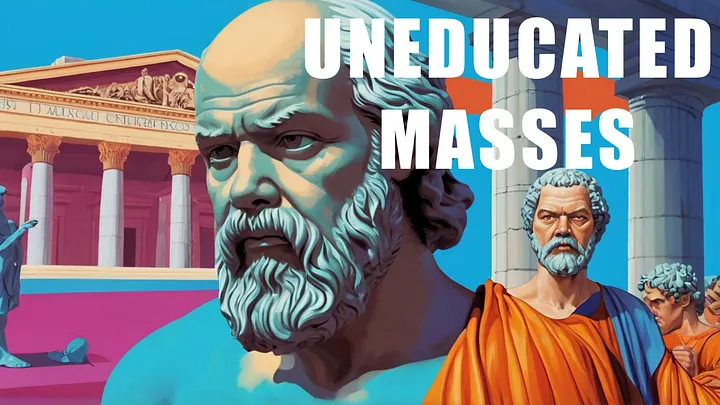 support. Instead of choosing policies based on knowledge and reason, voters might make decisions under the influence of emotions. Similar problems can be seen today when populist leaders make promises without offering practical solutions.
He was also concerned that politicians often put personal interests and short-term electoral gains above justice and the welfare of society. Businesses, too, may focus on profits while ignoring the long-term interests of workers, communities and the environment.
The founders of the United States also feared the dangers of unchecked majority rule. They therefore established a republic with constitutional safeguards to protect against the misuse of power.
However, Socrates did not propose replacing democracy with another system of government. He believed that good governance depended on educating citizens and developing their moral character. A just society, in his view, must promote fairness under the law, honesty, wisdom, cooperation and the common good.
Today, social media and the spread of misinformation have made these concerns particularly relevant. Citizens can be influenced by misleading information and emotional propaganda, making it harder to distinguish facts from falsehoods.
The central lesson is that democracy cannot succeed through elections alone. It also requires an educated, informed and responsible public capable of thinking critically, evaluating political promises and choosing leaders on merit rather than emotion. The quality of democracy ultimately depends on the wisdom and awareness of its citizens. .. Source