
Why Our Prayers for Guidance are Not Answered by Allah
اردوWe Muslims pray five times a day, and every prayer begins with the plea: “Ehdina Siratal Mustaqeem” (Show us the right path). Yet, as soon 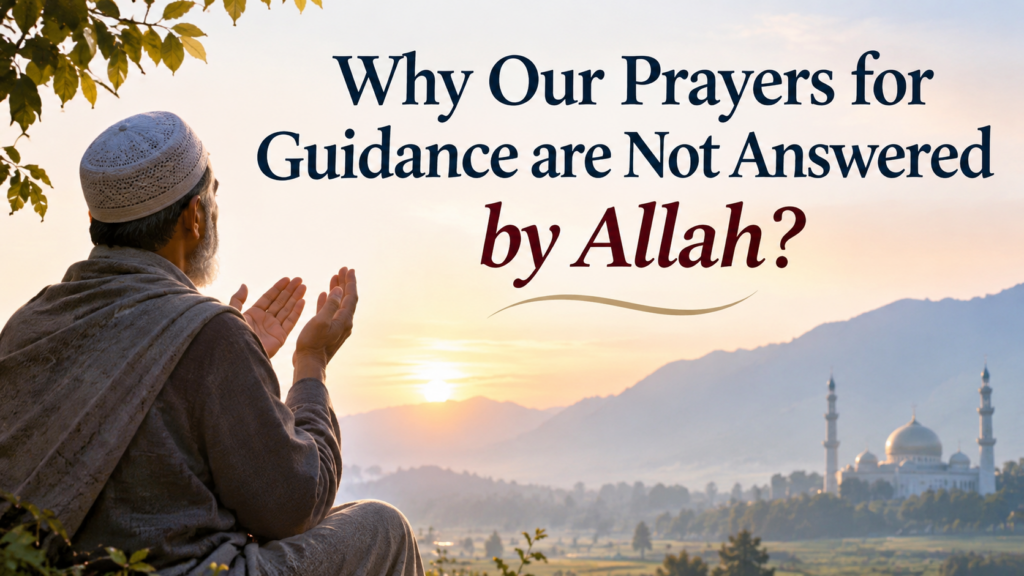 as we leave the mosque, we return to the very path we asked Allah to keep us away from: lying, cheating, fraud, injustice, cruelty to animals, Hypocricy, selfishness etc.
This gap between our words in prayer and our conduct outside it raises a serious question: is our prayer truly comming from our hearts or has it become a mere ritual?
We invariably return to our old ways of lying (save noble exceptions) , cheating, deceiving, exploiting others, denying people their rights and treating the weak with cruelty. Some of us do not even spare animals from our harshness. We speak of Islam with pride but fail to practise its simplest teachings in our daily lives.
The question is: Do we really mean what we ask Allah for five times a day? Or have we reduced this beautiful prayer to a mere ritual, repeating its words without understanding their meaning or accepting the responsibility that comes with them?
Asking Allah to show us the right path is not simply a request for guidance. It is also a commitment to walk that path. Prayer is meant to transform our character, purify our conduct and make us better human beings. If our prayers do not make us more honest, compassionate, fair and considerate towards others, we need to seriously examine their impact on our lives.
Allah does not need our prayers; we do. Their purpose is to reform us, not merely to fulfil a religious obligation.
Perhaps the real question is when we ask why Allah does not answer our prayers, we should ask ourselves whether are we willing to follow the guidance we so repeatedly ask Him to give us. .. CN report, 08 Nov 2026