
Social Media is Changing the Sermons of Prayer Leaders
CHITRAL: The younger generation, particularly Gen Z, deserves credit for bringing contemporary social issues into religious discourse. Even the sermons delivered by prayer leaders before Friday prayers appear to be reflecting this gradual change.
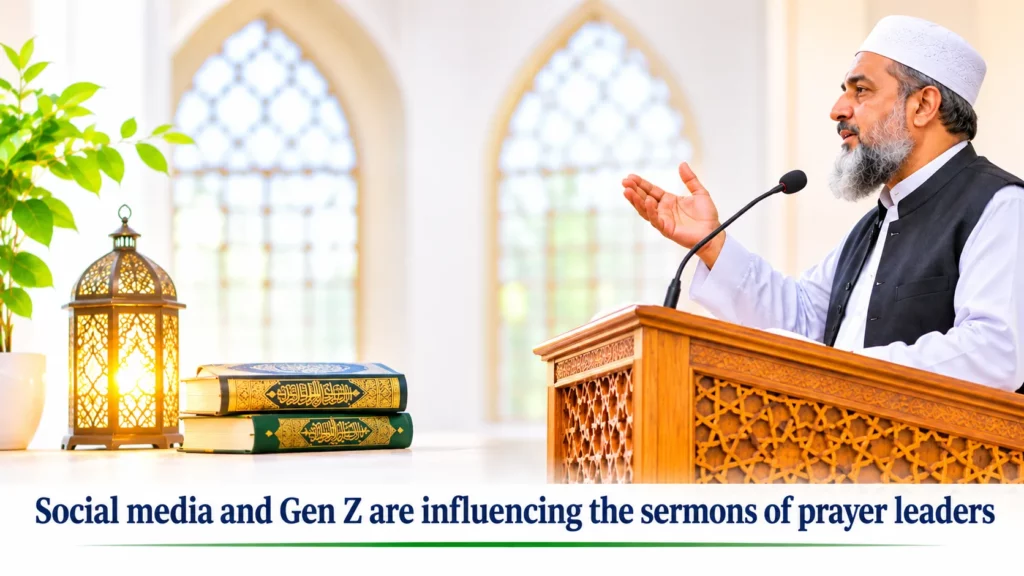
For decades, most sermons would begin with accounts of bygone days, recount stories of religious personalities and eventually turn towards the rewards and retributions of the hereafter. While these subjects have their importance, something was always missing: the life we are living today and our responsibilities towards the people and environment around us. Issues such as social justice, compassion, honesty, human dignity, public welfare and our obligations towards fellow human beings rarely received the attention they deserved.
Social media may be helping to change this pattern. A younger, more informed and increasingly vocal generation is questioning established practices and demanding that religious discourse address the realities of contemporary life. Perhaps this growing public engagement is also encouraging religious leaders to broaden the scope of their sermons, albeit gradually and cautiously.
Recently, at an elite mosque in Islamabad, a particularly refreshing example was witnessed. The Imam began his sermon by quoting the holy Quran on social behaviour and our obligations towards society. Instead of confining the discussion to individual religious observances, he brought attention to the responsibilities we owe to fellow human beings. It was a pleasant and encouraging departure from the conventional approach.
Religion is not merely about preparing for the hereafter; it is also about making life better for humanity here and now. Perhaps our religious discourse needs to give equal attention to both dimensions.
A society cannot become morally upright merely through rituals and religious pronouncements. It must also practise dignity, compassion, justice, honesty and respect for humanity.
Thank you, social media. Thank you, Gen Z, for gently reminding us that faith must also find expression in how we deal with one another. .. CN report, 27 Nov 2026
Rituals have their own importance and majority of the muslims perform these rituals regularly. The need of our times is that our religious leaders and scholars should understand the challanges of the time and space and rise to address them.
The purpose of all religions has been to build better societies based on justice, compassion and fair play. Without giving due importance to ‘ huququllah and huququl ibad’ it is impossible to build better societies. Ultimately, the objective of all religious observances is that there must be justice for all and help for the vulnerable and that both ‘spiritual and temporal’ go together supplementing and complementing each other.
It is encouraging and positive sign of the change of mind of religious leaders. Surely it is due to access of every one to information thanks to advanced technologies, social media and Gen Z. It is need of the day that our religious leaders realize it and change their long standing static position towards the way of preaching- Rutuals and practices are no doubt important part of religious belief but Islam emphasises more on social behaviour and well being of humanity-