
Pakistan: Financing present avoidable expenditures by mortgaging the future – Dark at the end of the tunnel
Since its inception, Pakistan has relied heavily on borrowing to finance its ambitions, its deficits, and its inefficiencies. What began as a temporary economic tool has evolved into a permanent national dependency. Today, the country is so deeply entangled in debt that a substantial portion of its revenues is consumed merely by servicing loans, leaving little room for development, education, healthcare, or public welfare.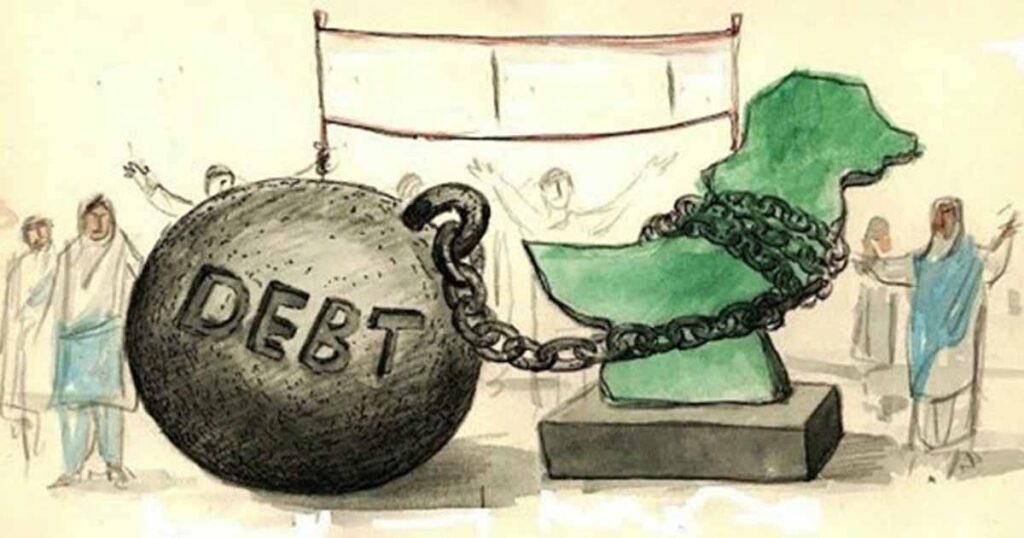
The tragedy does not end there. Pakistan now borrows not to build new infrastructure or create wealth, but increasingly to repay old loans and their interest. It is a vicious cycle in which debt begets more debt, pushing the nation deeper into financial bondage with each passing year.
While ordinary citizens bear the burden through inflation, higher taxes, rising utility bills, and declining living standards, the ruling elite continues to enjoy exaggerated privileges, perks, and lavish lifestyles largely insulated from the economic hardships facing the public. The calls for austerity always invariably apply to the people, never to those in power.
The dubious role of international financial institutions, particularly the IMF, also deserves scrutiny. While the Fund presents itself as a lender of last resort, its prescriptions often leave borrowing nations trapped in a cycle of dependence. A country perpetually negotiating bailout packages can hardly claim complete economic sovereignty. Policies increasingly become dictated by creditors rather than shaped by national priorities.
Yet it would not be fair to place all blame on external actors. No institution forces a nation to live beyond its means decade after decade. The primary responsibility lies with successive governments that have preferred easy borrowing over difficult reforms, consumption over productivity, and short-term political gains over long-term economic stability.
The harsh reality is that no nation has ever borrowed its way to prosperity. Sustainable progress is built on production, exports, innovation, fiscal discipline, and honest governance—not on endless loans.
Pakistan stands at a crossroads. It can continue down the familiar path of debt, dependency, and recurring crises, or it can choose the harder but more dignified road of self-reliance and reform. The choice is simple. What remains uncertain is whether the political will or more rather the will of the powers to be exists, to make it. A nation that finances its present by mortgaging its future eventually loses both. .. CN report, 13 June 2026
Pakistan is not supposed to be a poor country by virtue of it’s rich intrinsic natural and human resources. However we always find it in dire straits due to mismanagement of these resources. Ever since it’s inception every govt that has grabbed power has thought it was it’s only chance and started pillaging without mercy; but it always happens that the next govt fares even worse and people again vote for the earlier one, as “lesser evil”. This cycle goes on. The story is like the one of a certain ‘gorkan'(grave digger) in a village who would revist the fresh graves at night and strip the bodies of their coffin sheet. People hated him for this and he knew it. On his death bed he asked his son to do something whereby after his death the people do not remember him with negative thoughts. On taking over his father’s job the son started not only stripping the coffin cloth off the dead bodies but also desecrated the bodies. The villagers on comming to know of it said the earlier gorkan was better than this one!. This is the story of Pakistan.
Nicely pointed out. Our economy is enslaved to IMF. There is no imminent hope of getting out of the shackles of IMF unless meaningful structural reforms are implemented.
Pakistan’s economic challenges are unlikely to ease unless powerful feudal interests are brought into the tax net and the elite curb their wasteful use of public resources. Without structural reforms and greater economic justice, lasting recovery will remain difficult.
Good governance and educated and enlightened citizens can salvage the country from the current dismal situation.
@ Mir Wazir Khan. How? Could you give some viable solutions.